A full year is too long to stay focused, and a single week is too short to change much. Ninety days hits the sweet spot: long enough to achieve something meaningful, short enough to keep urgency high.
Why 90 days works
Twelve-month plans tend to lose energy by month three. Priorities shift, markets move and teams forget what they agreed on in January. A 90-day sprint gives you a fixed finish line that feels close enough to create urgency, while still leaving room for real work like launching a product, rebuilding a website or opening a new sales channel.
Step 1: Diagnose before you plan
Start by looking honestly at where your business stands. Review your numbers for the last quarter: revenue, margin, leads, conversion rate and cash. Talk to a few customers and team members. Ask one question above all: what is the single biggest thing holding us back right now?
Step 2: Choose one sprint theme
Pick one theme for the sprint, based on your biggest bottleneck. Examples include "fill the sales pipeline," "fix customer onboarding" or "launch the online store." A single theme keeps the whole team pointed in the same direction.
Step 3: Define the finish line
Write down what success looks like on day 90, using numbers wherever possible. "Generate 150 qualified leads per month" is clear. "Improve marketing" is not. If you can't measure it, you can't manage it.
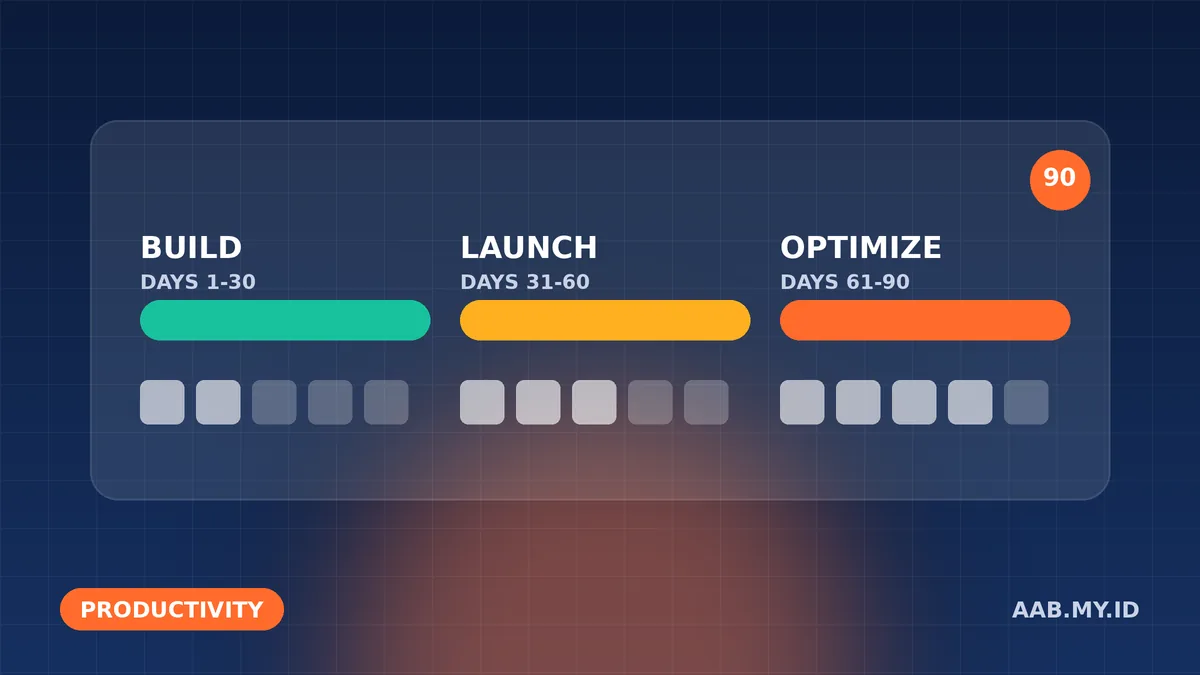
Step 4: Break it into three 30-day phases
- Days 1–30: Build. Set up the tools, content, processes and people you need.
- Days 31–60: Launch. Put the plan in front of real customers and start collecting data.
- Days 61–90: Optimize. Double down on what's working, cut what isn't and lock in the gains.
The goal of a sprint isn't to be perfect. It's to make visible progress, learn quickly and finish stronger than you started.
Step 5: Run a weekly rhythm
Every week, hold a short meeting to review the scoreboard, agree on the top three priorities for the coming week and remove obstacles. Keep it short and focused on decisions, not status updates.
Step 6: Protect the sprint
New ideas will appear mid-sprint. Write them in a "parking lot" list instead of acting on them immediately. Unless something is truly urgent, it waits for the next sprint. This discipline is what separates teams that finish from teams that are always starting.
Step 7: Close with a retrospective
On day 90, review the results against your finish line. Celebrate wins, document lessons and decide on the next sprint theme. Over four sprints, you'll have made more progress in a year than most businesses make in two.
Key takeaway: One theme, one measurable finish line, three phases and a weekly rhythm. Repeat four times a year to accelerate boldly.